JGRJ Today (Blog)

Who Deserves Healthcare and Who Gets It: Are We Doing Enough to Protect Incarcerated People?
Sunday, November 15, 2026
A $94.5 million bond for construction of the proposed new Johnson County jail and sheriff’s office was on the ballot for the fourth time this midterm election, and it failed to reach a sixty percent majority approval. The proposed construction of this jail would expand housing from ninety-two inmate beds to one-hundred and forty, as well as support construction of a new sheriff’s office. Supporters of the jail cited the current living conditions and cost of upkeep as the reason for building a new facility, with the new roof and HVAC system having cost taxpayers three million dollars.
Opponents of the construction of the new jail argued that Johnson County does not need a new jail; beyond the price tag, the population of incarcerated individuals is decreasing and over half of the actual building structure would be reserved for the sheriff’s office. Inmate cells in the proposed new jail would be smaller than the K9 kennels.

Cash Only: Freezing Activists’ Bank Accounts is a Human Rights Violation
Sunday, November 8, 2026
I woke up to the sound of unfamiliar birds mingling with the smell of rain, rough wood paneling covering the wall next to me and the ceiling fifteen feet above me. I was still in Ecuador, and it was finally time for our class to move on from the small city at the edge of the Amazon where we had been stuck for three weeks while the country ground to a halt from national protests. The summer after my fourth year of undergrad, delayed by COVID, I was finally on my study abroad experience only for our group of twenty students and two leaders to get stuck while activists challenged the Ecuadorian government.

A Tolerance for Pain: A critique of the Supreme Court’s Current Test for Eighth Amendment Claims
Sunday, November 1, 2026
Another state-sanctioned murder should not be tolerated: botched or not. On September 30th, 2026, Tennessee intended to execute Christa Pike. Complications with the insertion of Pike’s IVs caused the pentobarbital to flow into her body causing “blisters on her arms from the bleach–like, caustic substance.” This was Tennessee’s second botched execution in four months.

Silo: The Dystopian TV Show that Criticizes Textual Obsession
Monday, October 26, 2026
I am one of many people who have found themselves obsessed with the mystery box TV show, Silo. It follows a post-apocalyptic society living underground in a giant—get it—silo. At the beginning of the show, you quickly learn the Silo’s mantra: “We do not know why we are here. We do not know who built the Silo. We do not know why everything outside the Silo is as it is. We do not know when it will be safe to go outside. We only know that today is not that day.” People who are overcome with curiosity for the outside world or sick of the unexplained panopticon of Silo society may choose to go outside, where they die within seconds. Many people have discussed the implications and social commentary of how the Silo society reflects concerns for the future of our world, but I have continually been struck by the similarities to our present-day world as well.

Corporations as Persons and Animals as Property
Sunday, October 18, 2026
The Golden Rule: “Do unto others as you would have them do unto you.” On its face, this principle seems simple. However, when faced with the question, “Who are others?” Society has gotten the answer wrong so many times with respect to enslavement, women, and potentially regarding unborn fetuses with ongoing debates. Defining “others” gets to the heart of who is a subject of justice. It also gets to a backbone of our legal system.

Granted, Then Doubted: The Stigma the ADA Can’t Reach
Thursday, October 1, 2026
Every law student with a disability faces a quiet calculation: whether asking for help the law guarantees is worth what it might cost. The ADA promises equal access, but it only works for students willing to come forward, and a surprising number decide not to.

The Effect of Purdue on DIP Financing Without Nonconsensual Releases
Tuesday, April 21, 2026
When a debtor files a Chapter 11 case, the process, also known as restructuring or reorganization, is intended to benefit three parties: the debtor, creditors and third parties. In the ideal scenario, the debtor is allowed to maintain its business and employees keep their jobs. The creditors receive payment for their claims against the debtor. Third parties, or non-debtors, are incoming creditors ready to provide the debtor with new financing to continue operations, benefitting from interest on principal in a “buy-low” market. However, this scheme becomes very complicated in the context of mass tort bankruptcies.
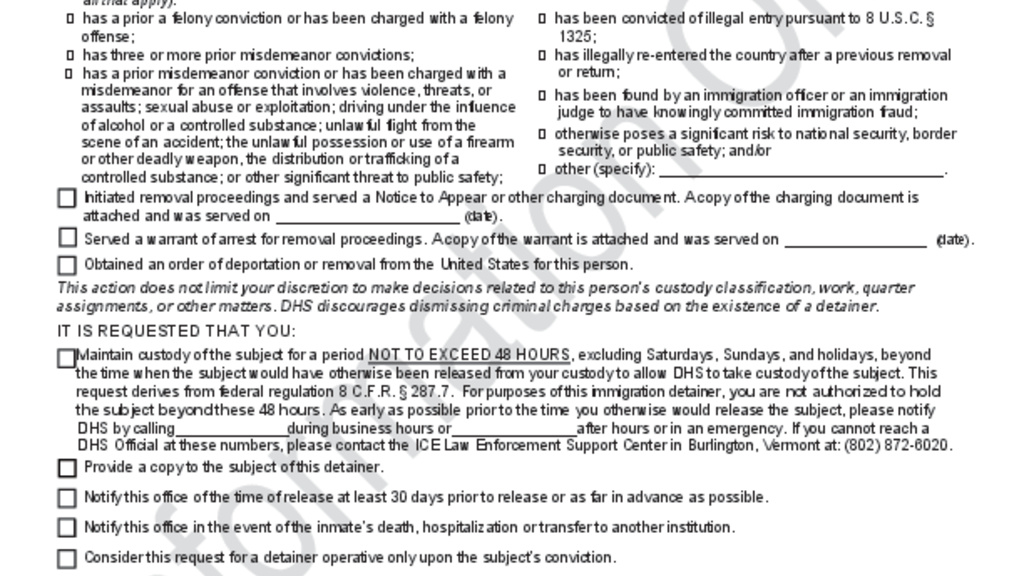
Comply or Be Sued: How Iowa's "Sanctuary City" Law Limits Law Enforcement Officers
Tuesday, April 15, 2025


"He Passed by on the Other Side”: Putting the Samaritan into Iowa’s Good Samaritan Law.
Wednesday, March 19, 2025